The Golden Age of Portuguese Sephardic Jews
The story of Portuguese Sephardic Jews represents one of the most significant chapters in Jewish diaspora history. Before the forced conversions and expulsions of the late 15th century, Jewish communities flourished throughout Portugal, contributing enormously to the country’s cultural, economic, and intellectual development.
Portugal became home to Sephardic Jews as early as Roman times, but their presence grew substantially following the Moorish occupation of the Iberian Peninsula. During the early Middle Ages, Jewish quarters known as “judiarias” emerged in many Portuguese cities, becoming centers of trade, scholarship, and cultural exchange.
By the 13th and 14th centuries, Portuguese Sephardic Jews had established themselves as vital members of society. They worked as physicians, astronomers, mathematicians, cartographers, and royal advisors. Their expertise in navigation and mapmaking proved especially valuable during Portugal’s Age of Discovery, when many Jewish scholars contributed to the maritime achievements that would define Portugal’s golden era.
In cities like Lisbon, Porto, and Belmonte, Jewish communities created vibrant neighborhoods with synagogues, schools, and bakeries. They developed distinct traditions that blended Sephardic customs with local Portuguese influences, creating a unique cultural identity that would later spread throughout the world.
The Turning Point: Forced Conversion and Exile
The golden age of Portuguese Sephardic Jews came to an abrupt end in December 1496, when King Manuel I decreed that all Jews must convert to Christianity or leave the country. This edict came just four years after Spain’s similar expulsion order, largely because Manuel hoped to marry the daughter of Spain’s Catholic monarchs.
Unlike in Spain, however, Portugal’s king soon realized the economic impact of losing the Jewish population would be devastating. Instead of allowing them to leave, he ordered the forcible conversion of all Jews in 1497. This created the phenomenon of “New Christians” or “Conversos” – Jews who outwardly practiced Catholicism while often maintaining their Jewish traditions in secret.
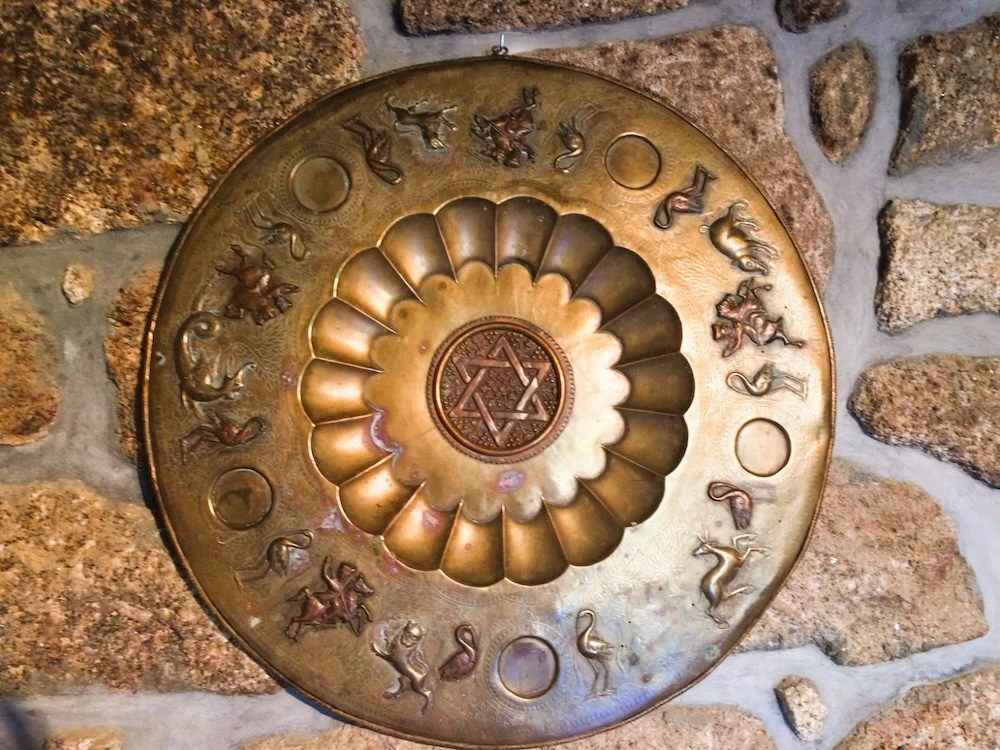
These crypto-Jews developed ingenious ways to preserve their heritage. They created special candlesticks that could be quickly disassembled to hide their Sabbath observance. They passed down prayers and customs through oral tradition, often modifying Jewish practices to appear Christian. For example, some families would clean their homes on Friday but light candles on Saturday to avoid suspicion from neighbors who might notice the Friday evening preparations for Shabbat.
The Portuguese Inquisition, established in 1536, hunted these crypto-Jewish practices relentlessly. Those suspected of “judaizing” faced imprisonment, torture, and even death. Records show that between 1540 and 1794, the Portuguese Inquisition tried approximately 40,000 cases, with many of the accused being of Jewish descent.
Global Diaspora and Cultural Preservation
Despite these dangers, many Portuguese Sephardic Jews managed to escape to more tolerant regions. They established new communities across the Mediterranean, Northern Europe, and eventually the Americas, carrying with them their distinctive Portuguese Sephardic traditions.
Amsterdam became a particularly important center for Portuguese Jewish refugees. There, they established a community that maintained strong ties to their Iberian heritage while openly practicing Judaism. The Esnoga (Portuguese Synagogue of Amsterdam), completed in 1675, stands as a magnificent testament to this community’s prosperity and resilience.
Other Portuguese Sephardic Jews fled to the Ottoman Empire, where they found relative tolerance under Muslim rule. Cities like Thessaloniki, Istanbul, and Smyrna developed thriving Portuguese Jewish communities. In these new homes, they maintained their distinctive Ladino language (Judeo-Spanish) with unique Portuguese influences, as well as their culinary traditions, religious customs, and family names.
The Portuguese Sephardic diaspora also spread to the New World. In places like Curaçao, Suriname, Jamaica, and later New York, Portuguese Jewish refugees established communities that played important roles in early colonial trade networks. The Touro Synagogue in Newport, Rhode Island, founded by Portuguese Sephardic Jews in 1763, stands as the oldest synagogue building in the United States.
Hidden Communities: The Secret Jews of Portugal
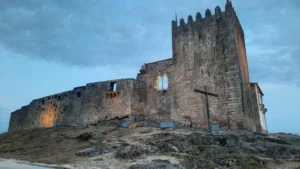
While many fled, some Portuguese Sephardic Jews remained in Portugal, practicing their faith in absolute secrecy. The most famous example is the community of Belmonte, where crypto-Jews maintained their traditions for over 500 years, completely isolated from the wider Jewish world.
The Belmonte Jews developed unique prayers and practices based on the oral transmission of Jewish knowledge. Without rabbis, books, or contact with other Jewish communities, their Judaism evolved into something distinct from mainstream Jewish practice. They created their own prayer rituals, often incorporating Catholic elements as camouflage while maintaining core Jewish beliefs.
These hidden communities lived in constant fear of exposure. They typically married among themselves to protect their secret, developing complex codes and signals to identify fellow crypto-Jews. They would refer to themselves as “people of the Nation” rather than Jews and used terms like “the Law of Moses” instead of Judaism.
It wasn’t until the 1920s that these communities began to be rediscovered by Jewish researchers. Samuel Schwarz, a Polish mining engineer, published “New Christians in Portugal in the 20th Century” in 1925, bringing international attention to the crypto-Jews of Belmonte. However, deeply ingrained fear meant many continued their secret practices until after Portugal’s return to democracy in 1974.
Revival and Recognition in Modern Portugal
The late 20th century marked a turning point for Portugal’s relationship with its Sephardic Jewish heritage. As the country embraced democracy after the 1974 Carnation Revolution, there came a new openness to acknowledging and celebrating Portugal’s multicultural past.
In 1989, the Belmonte community officially returned to mainstream Judaism, establishing a formal synagogue. Other communities of crypto-Jews throughout Portugal’s interior regions also began reconnecting with wider Jewish traditions, though many chose to maintain their Catholic identity while acknowledging their Jewish ancestry.
Portugal has increasingly recognized the historical injustice done to its Jewish population. In 2013, the Portuguese parliament unanimously approved a law granting citizenship to descendants of Sephardic Jews expelled during the Inquisition. This legislation, which came into effect in 2015, has allowed thousands of Sephardic descendants worldwide to reclaim their Portuguese heritage.
Today, Jewish heritage sites across Portugal have been restored and opened to visitors. The ancient synagogue of Tomar, converted to a small museum, showcases artifacts from Portugal’s Jewish past. In Lisbon, the Shaare Tikva Synagogue, built in 1904, serves the city’s revitalized Jewish community. Cities like Porto, Belmonte, and Castelo de Vide have established Jewish museums and restored their historic Jewish quarters.
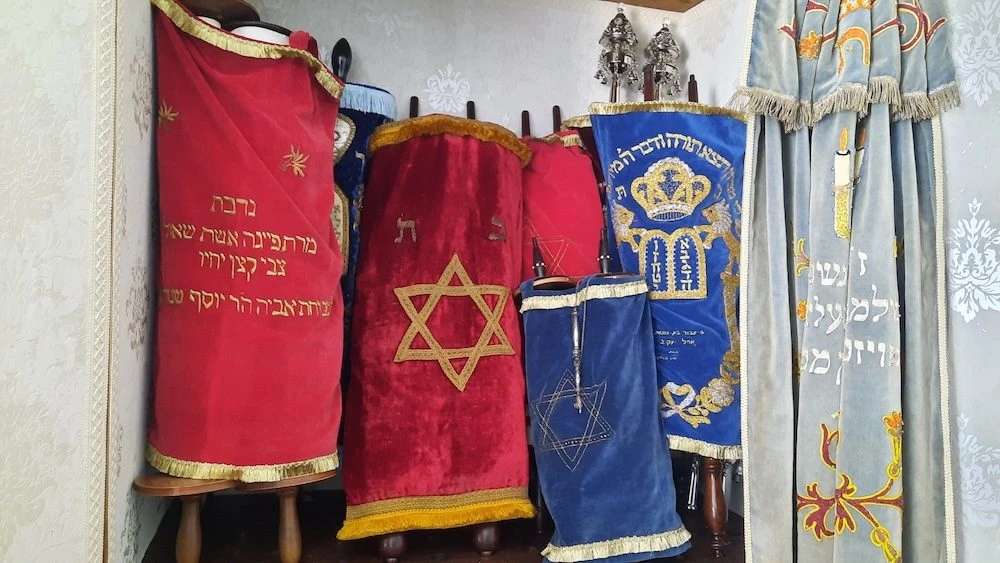
Experience Lisbon's Jewish Heritage with a Specialized Tour
While it’s possible to explore some of Lisbon’s Jewish sites independently, much of this rich history remains hidden beneath layers of time and transformation. To truly understand the depth and significance of Portuguese Sephardic Jewish heritage, consider joining the Lisbon Jewish Tour offered by Real Embrace Portugal.
This specialized tour takes you beyond the surface to discover:
- The hidden remnants of Alfama’s Old Jewish Quarter, where expert guides bring the history back to life
- The memorial monument erected by Lisbon’s Jewish community and the church’s nearby monument
- The Ohel Jacob Synagogue and its museum, featuring an impressive collection of Torahs, including one that is more than 500 years old
- The former Judaria Grande in Baixa, once bustling with successful Jewish merchants
- Jewish customs still present in the community and architecture
- The riverside where Jewish refugees during WWII departed for New York and South America
For those wanting a broader understanding of Lisbon alongside its Jewish heritage, the Private Lisbon Tour offers a comprehensive experience of the city, including its historic neighborhoods and major landmarks.
Cultural Legacy and Continuing Influence
The influence of Portuguese Sephardic Jews extends far beyond religious practices. Their cultural contributions have shaped Portuguese society in numerous ways, many of which endure to this day.
In language, numerous Portuguese words have Hebrew origins. Terms like “safar” (to travel), “acaçapar” (to hide), and “engrazar” (to be funny) reveal linguistic traces of centuries of Jewish presence. Many Portuguese family names also reflect Sephardic heritage, often named after towns, trees, or animals – a common practice among conversos seeking to disguise their Jewish origins.
Portuguese cuisine bears strong Sephardic influences. Dishes like “Arroz de Tomate” (tomato rice) and “Cação de Cebolada” (dogfish with onions) have roots in Jewish cooking traditions. The famous Portuguese egg pastries found throughout the country evolved from convent sweets that used egg yolks, while the egg whites were used by Jewish communities to starch religious garments.
Even Portugal’s famous maritime discoveries had significant Jewish contributions. Abraham Zacuto’s astronomical tables were crucial for Portuguese navigation, while other Jewish cartographers, astronomers, and financiers played vital roles in Portugal’s Age of Discovery.
Preserving Memory: Museums and Cultural Institutions
Today, several institutions work to preserve and celebrate Portugal’s Sephardic heritage.
The Jewish Museum of Belmonte offers a unique window into the world of crypto-Judaism and how this isolated community maintained its traditions.
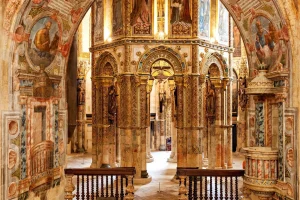
The Synagogue of Tomar and Abraão Zacuto Museum are key Jewish heritage sites. It is the only Jewish religious building to have remained intact since its construction in the mid-15th century. This Proto-Renaissance building symbolizes the close relationship between Tomar’s Jewish community and Henry the Navigator during a period of growth. An archaeological excavation nearby revealed a mikveh adjoining the synagogue.
The House of the Inquisition: Interactive Center of Jewish History in Monsaraz was a hostel for members of the Holy Office or those accused. Still, it’s essential to assert that our Jewish history is a continuum that dates back far before the 16th-century Inquisition.
House of the Inquisition in Coimbra Through 13 panels with images of traces and memories of the persecutions, tortures, and deaths practiced in the name of defending the catholic faith and the Church during a dark period in the country’s history are exposed. The exhibition aims to “identify, decode, preserve and make accessible the legacy of the Jews of Coimbra.”
The Holocaust Museum of Porto (MHP) , established in 2021 by the Jewish Community of Porto in collaboration with B’nai B’rith International and other Holocaust museums, aims to educate the public, particularly youth. It focuses on education, training for educators, exhibitions, and research support.
Also in Porto, the Jewish Museum Barros Basto honors Captain Artur Carlos de Barros Basto, known as the “Portuguese Dreyfus,” who worked tirelessly in the early 20th century to help crypto-Jewish communities return to mainstream Judaism. His efforts led to the establishment of the Porto Jewish Community and the renovation of the Kadoorie Synagogue.
Academic institutions across Portugal increasingly support research into the country’s Jewish past. The University of Lisbon’s Center for Jewish Studies conducts important historical research, while cultural festivals throughout the country celebrate Sephardic music, literature, and cuisine.
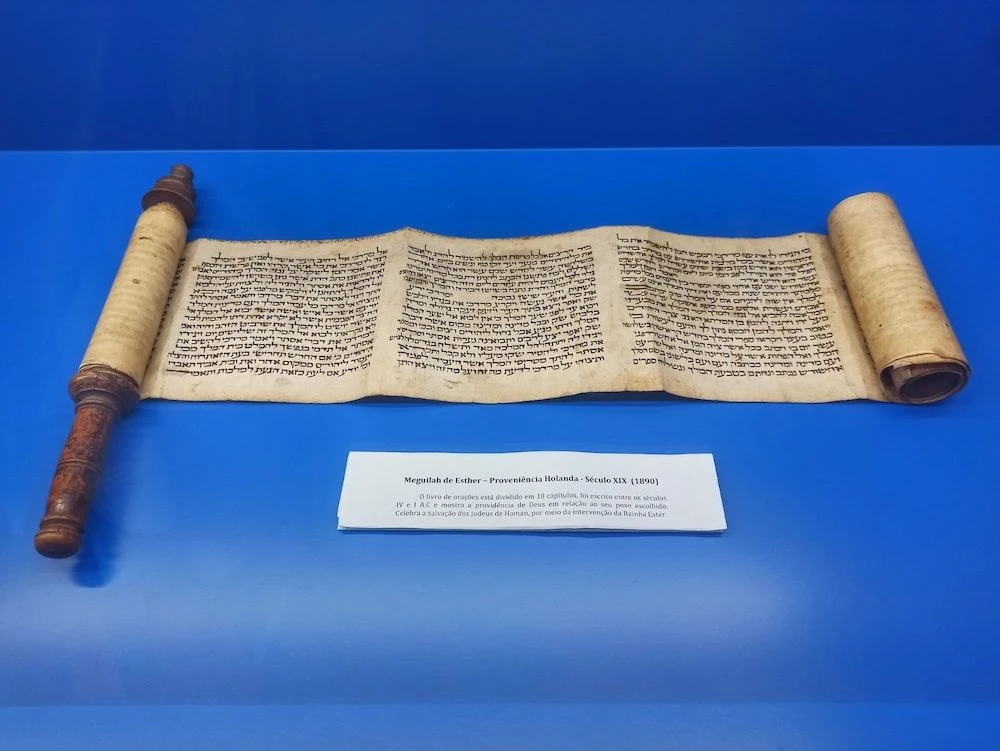
Looking to the Future
The story of Portuguese Sephardic Jews continues to evolve. Today, Portugal’s Jewish community remains small but vibrant, with new members arriving as a result of the citizenship law and growing interest in reclaiming lost heritage.
Many Portuguese citizens with no formal Jewish affiliation are discovering and embracing their crypto-Jewish ancestry. This phenomenon, sometimes called “returning to the roots,” has led to a renewed interest in Jewish traditions and practices among people who grew up Catholic but have family customs that suggest Jewish origins.
Tourism focused on Jewish heritage has grown significantly, with visitors from Israel, the United States, Brazil, and other countries with large Sephardic populations coming to explore their ancestral homeland. This has encouraged further restoration and recognition of Jewish sites throughout Portugal.
As Portugal continues to reckon with this complex history, the legacy of Portuguese Sephardic Jews stands as a powerful reminder of both religious persecution and cultural resilience. Their story demonstrates how identity can persist even under extreme pressure and how a society can eventually come to recognize and celebrate the diverse traditions that have shaped it.
FAQ About Portuguese Sephardic Jews
When did Jews first arrive in Portugal?
Jewish communities have existed in Portugal since Roman times, with archaeological evidence dating back to the 2nd and 3rd centuries CE. Their presence grew significantly during the Moorish period (8th-12th centuries) and reached its peak during the 13th and 14th centuries.
What happened to Portuguese Jews in 1497?
In 1497, King Manuel I ordered the forced conversion of all Jews in Portugal. Unlike the Spanish expulsion of 1492, Portugal’s Jews were largely prevented from leaving the country and were forcibly baptized, creating a large population of “New Christians” or “Conversos” who often maintained Jewish practices in secret.
What is a crypto-Jew?
Crypto-Jews were individuals who publicly adhered to another religion (usually Catholicism) while secretly maintaining Jewish practices and beliefs. In Portugal, these communities developed elaborate codes and secret practices to preserve their Jewish heritage while avoiding detection by the Inquisition.
Where did Portuguese Sephardic Jews flee to?
Those who managed to escape Portugal established communities in more tolerant regions, including Amsterdam, Hamburg, London, the Ottoman Empire (Istanbul, Thessaloniki), North Africa, and later the Americas (Caribbean islands, Brazil, New York).
Do crypto-Jewish communities still exist in Portugal?
Yes, particularly in the interior regions like Belmonte, Trás-os-Montes, and Beira Baixa. While most have either fully returned to mainstream Judaism or fully integrated into Catholic society, some still maintain dual identities or unique syncretic practices.
Can descendants of Portuguese Sephardic Jews claim Portuguese citizenship?
Yes, since 2015, Portugal has offered citizenship to proven descendants of Sephardic Jews expelled during the Inquisition. Applicants must provide evidence of their Sephardic ancestry and connection to Portugal, usually through certification from Jewish communities in Portugal or other countries with historical Portuguese Sephardic presence.
What distinguishes Portuguese Sephardic traditions from other Jewish traditions?
Portuguese Sephardic traditions include unique liturgical customs, distinct pronunciations of Hebrew prayers, specific food traditions (especially avoiding mixing meat with fish), and certain holiday practices that differ from both Ashkenazi traditions and other Sephardic communities.
How can visitors experience Jewish heritage in Portugal today?
Visitors can explore restored Jewish quarters in cities like Lisbon, Porto, Belmonte, Castelo de Vide, and Tomar. There are several Jewish museums, active synagogues that welcome visitors (with advance arrangements), and specialized tours focused on Jewish heritage.